The process of creating a site is a systematic one and consists of various steps, including planning and implementation. The next most popular question that businesses pose is, How long will it take? This is based on a number of factors, which include complexity, features, and collaboration.
The knowledge of the time frame of the website development will provide a realistic expectation, and the subsequent project will be executed with ease.
What Makes a Website Development Timeline?
The time it takes to construct a site depends on the project scope and requirements. The simplest type of site can be created within a couple of weeks, whereas a more complicated platform can be developed in a number of months.
Key factors include:
Website type (static or dynamic, or e-commerce)
Complexity and customization of design.
Number of pages and features
Content readiness
Client comments and corrections.
Newly established web design firms in India usually take a systematic approach to prevent failure to meet the deadline without undermining quality.
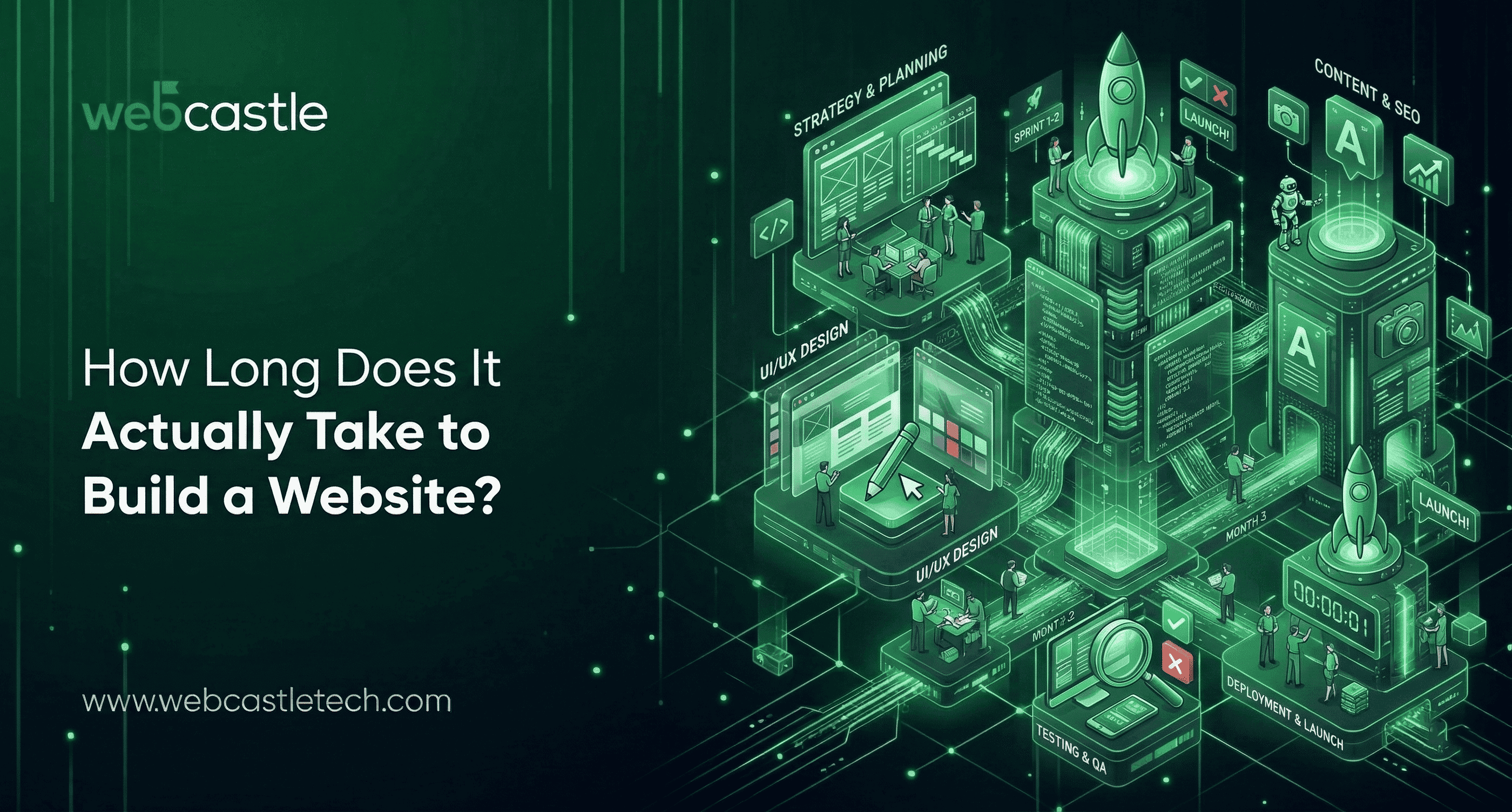
Web Design Process Step-by-Step.
The construction of a website does not happen in one day. It is based on a series of steps that are outlined as the web design process steps.
1. Project Discovery Phase
It is based on this that the whole project takes place. The project discovery phase involves the establishment of goals, target audience, and technical requirements.
Activities include:
Requirement gathering
Competitor analysis
Defining project scope
Creating timelines
The stage provides clarity and eliminates future delays in web projects.
2. Planning and Wireframing
The second stage entails the organization of the site structure. The time of wireframing in the site depends on the number of pages and the complexity.
Wireframes help in:
Visualizing page structure
Planning user journey
Finding a common ground in design expectations.
The step predetermines the design and development.
3. UI/UX Design
During this stage, designers develop the interfaces in a way that is appealing to the eyes and to the end user. It is centered on branding, usability, and responsiveness.
Deliverables include:
Homepage and inner page designs.
Mobile-responsive layouts
Elements of interactive design.
The teams of the leading web development company in India make sure that the design corresponds to the behavior of the users and the objectives of the business.
4. Development Phase
It is at this point that the real coding starts. This stage is the CMS development schedule and the functionality implementation.
Tasks include:
Front-end development and back-end development.
CMS integration
Form implementation (forms, payment gateways, etc.)
Complexity and integrations may make the custom site's time period different.
5. Content Integration
Text content is a very important factor in the performance and search engine optimization. During this stage:
Textual, visual, and video content is added.
There are search engine-optimized pages.
Aspects of branding are in harmony.
Most seo services in India also suggest optimization of the content at this stage in order to enhance visibility.
6. Website Testing Phase
The website is also heavily tested before it is launched online to confirm that nothing is going wrong.
Testing includes:
Speed checks and performance checks.
Mobile responsiveness
Browser compatibility
Error fixing and bug fixing.
The correct user experience is guaranteed by the adequate testing of the website.
7. Launching a New Website
When testing has been done, the site is now ready to be launched. This stage involves:
Final approvals
Domain and hosting setup
Deployment
The creation of a new site does not mean the finish, and it is only the starting point of constant optimization and updating.
Average Timae to Build a Site
On average, the schedule may appear as follows:
Basic website: 4–6 weeks
Middle-level complexity website: 6-10 weeks.
Advanced or eCommerce websites: 10-16 weeks.
Nevertheless, web project delays may be found in the requirements that are not clear, late submission of content, or long feedback loops by clients.
Agile Web Development Role.
Agile web development practices are applied to modern agencies to enhance flexibility and efficiency.
Benefits include:
Shorter cycle times and improvements.
Better collaboration
Continuous improvements
Reduced project risks
The client feedback loop is very important in this case, as feedback must be implemented at each stage.
Common Reasons for Delays
Delays may occur even in a structured process. Some common causes include:
Frequent design changes
Delayed approvals
Lack of clear communication
Scope creep
Technical challenges
In collaboration with an established Digital advertising agency in India or a web development partner, these problems will be reduced.
How to Speed Up the Process
To have a smooth and timely project:
Prepare content in advance
Provide timely feedback
Good requirements are clearly defined.
Select an agency that is experienced.
Do not do unnecessary revisions.
Teamwork and transparency are the two important qualities of an effective web development schedule.
Conclusion
The process of building a site is elaborate as it entails planning, designing, development, and testing. Although the average time to create the site is different, the knowledge of each step will make the process more controlled and guarantee improved outcomes.
By collaborating with a reputable web design firm in India or a reputable web development firm in India, you will have your project completed to your satisfaction. Together with professional seo services in India and assistance of a Digital advertising agency in India, your website will turn into a potent means of development.