A visitor can form an impression of your website within seconds. If the site looks old, is difficult to use, or does not clearly explain what your business offers, it can affect how people view your brand.
A website does not become outdated simply because it was launched several years ago. A five-year-old website can still work well if it is fast, mobile-friendly, easy to navigate, and supports your business goals. On the other hand, even a newer website can feel outdated if it is slow, difficult to manage, or no longer meets your customers' needs.
What Really Makes a Website Outdated?
Many businesses associate an outdated website with old fonts, dated colours, or a design that has not been changed since 2018. But age alone does not determine whether a website needs a redesign.
The more important question is whether the website still does its job. If customers struggle to find information, your team cannot update content easily, or the site no longer supports the way your business operates, it may be time for a change.
10 Signs Your Website Needs a Redesign
1. Your homepage no longer reflects your business
If your homepage promotes services you no longer offer or speaks to an audience you no longer target, it can confuse visitors and weaken your marketing efforts.
2. Your website gets traffic but few enquiries or sales
Website traffic is useful, but it does not mean much if visitors are not taking the actions you want. If people are not filling out forms, requesting a callback, making a purchase, or contacting your business, it may be time to review your website's content, user experience, and conversion paths.
3. Visitors struggle to find important information
Ask someone outside your company to find your pricing page, contact details, or another specific page. If they have trouble finding it, your website may have a navigation or information architecture problem.
4. Your website does not work well on mobile
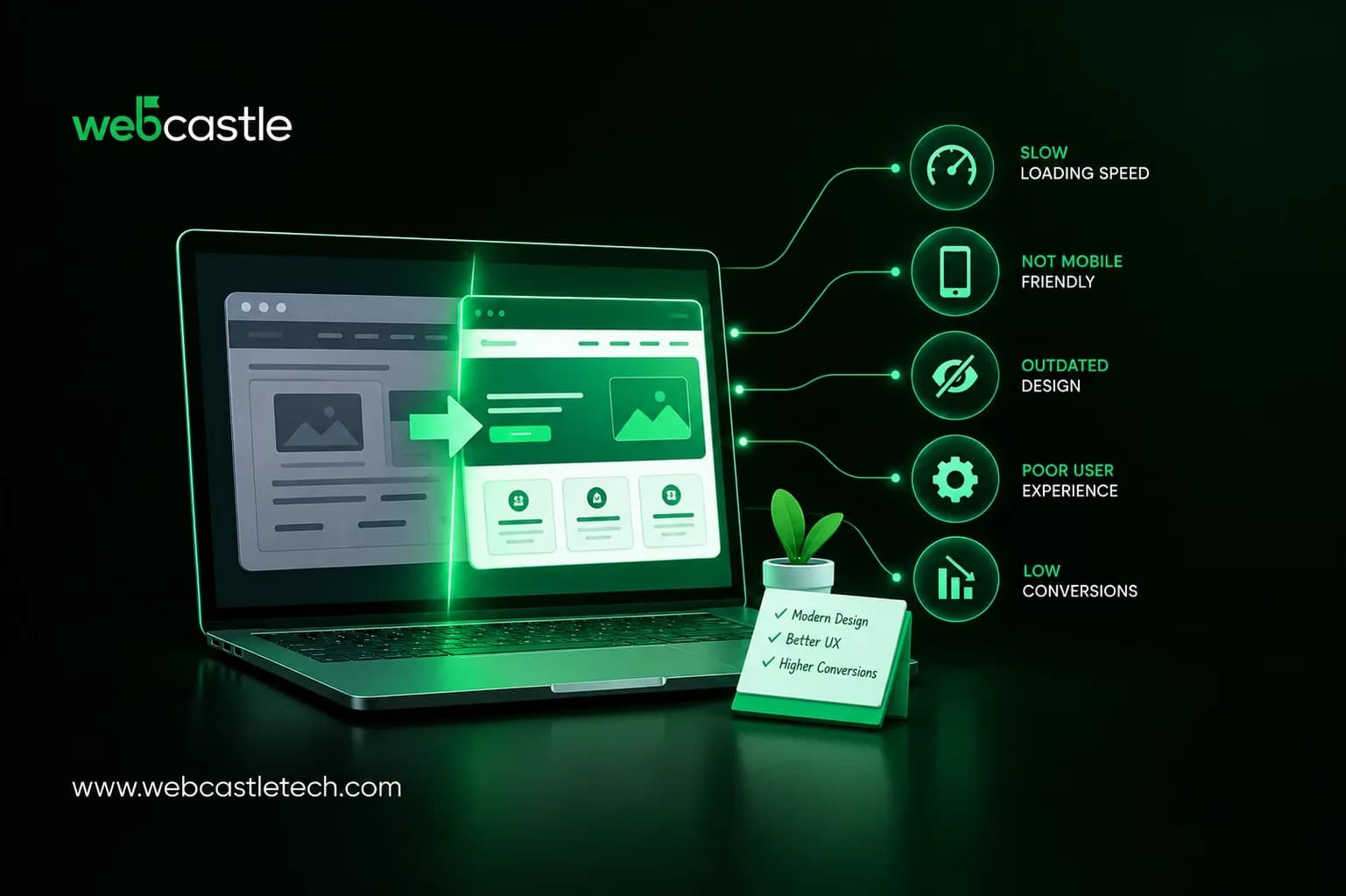
More people are accessing websites through mobile devices, so your website needs to work well on smaller screens. Small buttons, difficult-to-use forms, slow loading, and content that does not fit the screen can create a poor user experience and cause visitors to leave.
5. Your website is slow
Website speed affects the user experience, particularly on mobile devices. The 2025 Web Almanac found that only 48% of mobile websites achieved a "Good" overall Core Web Vitals assessment. This shows that website performance remains a common issue across the web.
6. You need a developer for every small update
If your marketing team has to depend on a developer to change a heading, update an image, add a new page, or change a price, your current CMS may not be meeting your needs. A well-configured CMS should allow your team to manage routine content updates without unnecessary technical help.
7. Your website cannot support your current business needs
Your business may have grown since the website was first built. You may now need online bookings, product filters, customer accounts, new payment options, or other features that the existing website cannot handle easily.
8. Your business tools do not work together
Your CRM, inventory system, payment platform, and analytics tools may all work independently. If your team has to move information manually between different systems, it can take extra time and increase the chance of errors. Connecting these tools can make everyday processes more efficient.
9. Your search visibility is declining
A drop in organic traffic can have many causes, including outdated content, technical SEO issues, changes in search behaviour, or stronger competition. In some cases, the website's structure or technical setup can also make it harder for search engines to understand and crawl the site.
10. Every website change creates a new problem
If making a simple change often breaks another part of the website, the underlying structure may need attention. When maintaining the existing site becomes increasingly difficult, a redesign or rebuild may be more practical than continuing to patch individual issues.
What Should a Website Redesign Fix?
A redesign should be about more than changing colours, fonts, or images. It should address the problems that affect how people use and manage the website.
This may include improving navigation, page speed, mobile usability, content structure, CMS functionality, and conversion paths. It should also make sure the website reflects what your business offers today and gives your team the flexibility to make future updates.
SEO should also be part of the redesign process from the beginning. Changes to URLs, page structure, internal links, metadata, and content can affect existing search visibility. A poorly planned redesign can result in lost rankings and traffic, while a well-planned one can protect existing SEO value while improving the website.
WebCastle Media, one of the top web design agency in Kerala, works on website design, development, and SEO for businesses across industries including hospitality, education, finance, real estate, and technology. The process starts by understanding what is working, what needs improvement, and what the business needs from its website today.
With design, development, and SEO handled together, the focus is not just on creating a new-looking website. It is also on maintaining existing search visibility while improving the user experience and making the website easier to manage.
Also Read: Best Practices for Creating User-Friendly Website Designs
Ready to Find Out What Your Website Needs?
Not every outdated website needs a complete rebuild. Sometimes, a few focused improvements can solve the main problems. An audit can help you understand whether your website needs a redesign, a rebuild, or specific improvements.
If your website is no longer meeting your business or customer needs, it may be time to take a closer look. Contact us to discuss your website and find out what improvements could make the biggest difference