
Most ERP software still tells you what already happened. Predictive analytics in ERP tells you what's about to happen, so you can act before a stockout, a cash crunch, or a machine failure. If your ERP dashboard only shows last month's data, you're not running a modern system. You're running a digital filing cabinet. Below is what predictive analytics actually does inside ERP, where it moves the needle first, and what it takes to implement it without wasting a year on bad data.
Here's the problem most businesses face: their ERP system is accurate yet useless at the same time. It logs every transaction correctly, but it also tells you nothing about tomorrow. Inventory managers still guess reorder points. Finance teams still build cash flow forecasts in spreadsheets bolted onto the ERP. Maintenance teams still fix machines after they break. The system has the data. It just doesn't do anything with it.
That is where predictive analytics comes into play.
What Is Predictive Analytics in ERP?
Predictive analytics in ERP refers to the use of algorithms, models, and artificial intelligence to anticipate future results or trends based on the data gathered from past transactions. It's built on the same information your ERP already gathers, from sales history to payment patterns, machine logs to procurement cycles. Predictive analytics runs that data through models that identify what's on the horizon. That's the distinction between ERP software as a record-keeper and AI in ERP as a decision-support tool.
Key Benefits of Predictive Analytics in ERP
- Better forecasting: Demand, revenue, and resource requirements aren't forecast from recycled assumptions. They're based on patterns in your own data.
- Smarter decision-making: Managers see a probability. That changes what gets approved and when.
- Improved operational efficiency: Fewer manual reconciliations, fewer emergency reorders, and fewer end-of-month surprises.
- Reduced business risk: Cash shortfalls, supplier delays, and equipment failures get flagged early enough to act on.
How Predictive Analytics Is Transforming ERP?
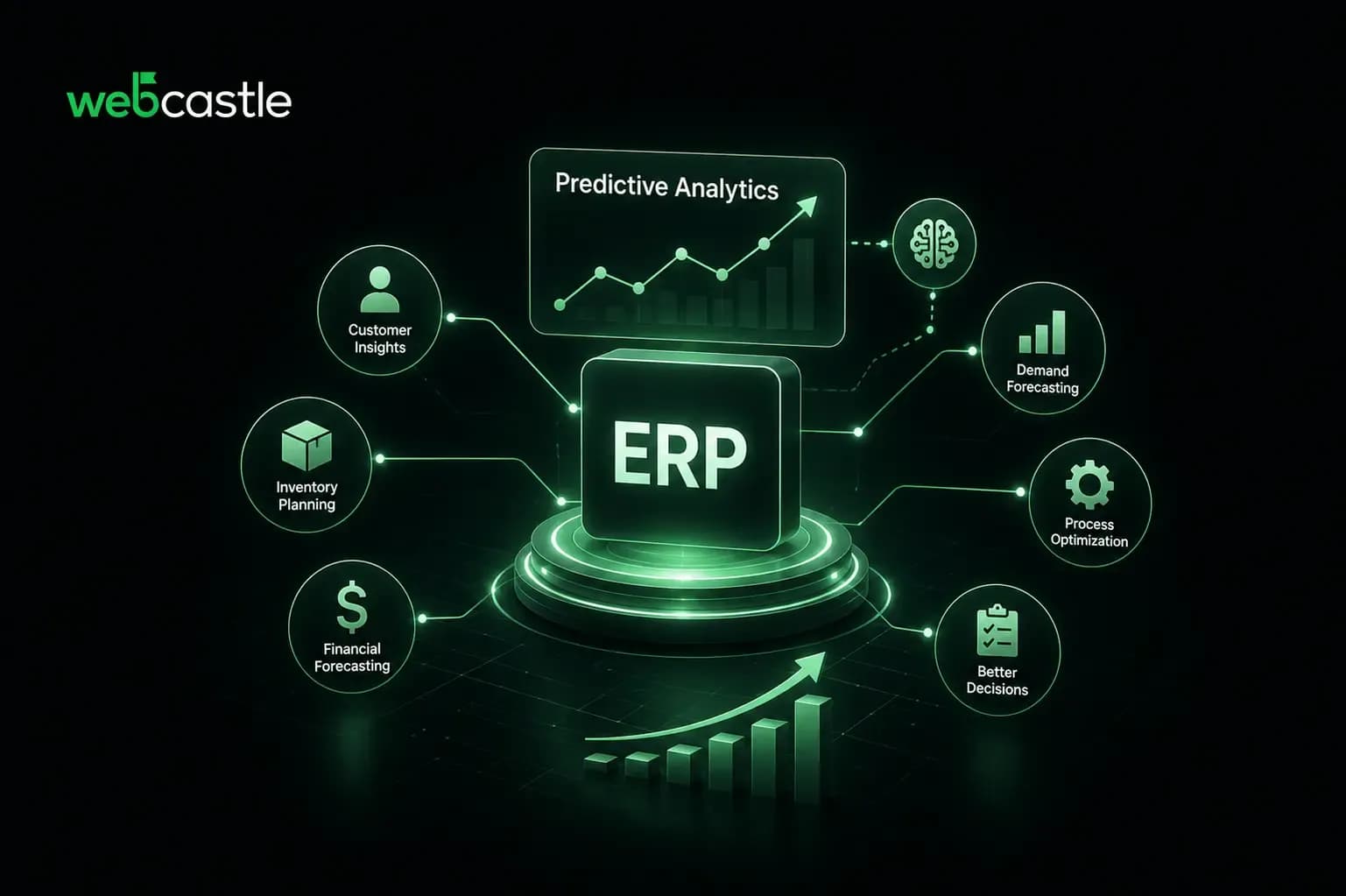
Demand forecasting: ERP analytics takes into account seasonal patterns, regional demand fluctuations, and past orders to forecast customer demand. Procurement shifts from reacting to shortages to ordering ahead of them.
Inventory optimization: Predictive models flag slow-moving stock, predict reorder points, and reduce overstock and stockouts. That's where ERP automation comes in handy; the system automatically lets you know that you're running low on stock before anyone notices.
Financial planning: Cash flow forecasting, expense pattern detection, and receivables risk scoring move from scattered spreadsheets into the ERP itself.
Predictive maintenance: Sensors and historical failure data flag equipment issues before they cause downtime.
Customer insights: Purchase history and behavior patterns feed business intelligence modules that predict churn risk, lifetime value, and next-best offers, all inside the same system that's already processing the sale.
Challenges and Best Practices
Predictive analytics is only as good as the data behind it, and this is where most implementations fail before they start.
- Data quality first: Garbage transaction history produces garbage predictions. Clean your data before you model it.
- AI integration: Bolting an AI tool onto an old ERP creates two systems that don't talk to each other. The predictive layer needs to live inside the ERP's data flow.
- Start narrow: Pick one function, maintenance, inventory, or cash flow, and prove the model works before rolling it out everywhere.
Custom ERP development beats generic add-ons. Off-the-shelf predictive modules are built for average companies. Yours isn't average. A system built around your actual processes will outperform a bolt-on plugin every time.
Choosing the Right ERP Partner
Predictive analytics only works effectively when the ERP system underneath it is built around your actual business processes. A generic system forces your operations to adapt to its structure. A system built around your workflows does the opposite. It also helps keep the data feeding the predictive layer accurate and consistent, rather than allowing errors or inconsistencies to enter at the source.
A few things are worth checking before you commit to an ERP vendor:
- Can the system be tailored to your actual processes, or are you expected to change your operations to fit the software?
- Does the vendor remain involved throughout implementation and support, or do they hand over the system and step away?
- Is predictive analytics built into the core ERP system, or is it added as a separate module that needs to integrate with other systems?
Getting these three things right helps ensure that predictive analytics works as part of a single, connected ERP system. Getting them wrong can leave you managing disconnected systems instead of one intelligent solution.
WebCastle Media, one of the top ERP software development companies in Kerala, builds ERP systems this way - from the ground up - for businesses that need more than a standard template.
The Bottom Line
Predictive analytics doesn't simply make your ERP smarter. It changes the questions your ERP can answer. Instead of only telling you “what happened, ” it can help answer “what's likely to happen, and what should we do about it?”
That shift can lead to fewer stockouts, fewer cash flow surprises, and better equipment maintenance by helping businesses identify potential issues before they become costly problems.
If your ERP is still just reporting the past, you're leaving decisions on the table that the data could already be making for you.
If your ERP is holding your business back instead of moving it forward, talk to WebCastle Media about what a system built around your actual data could do.