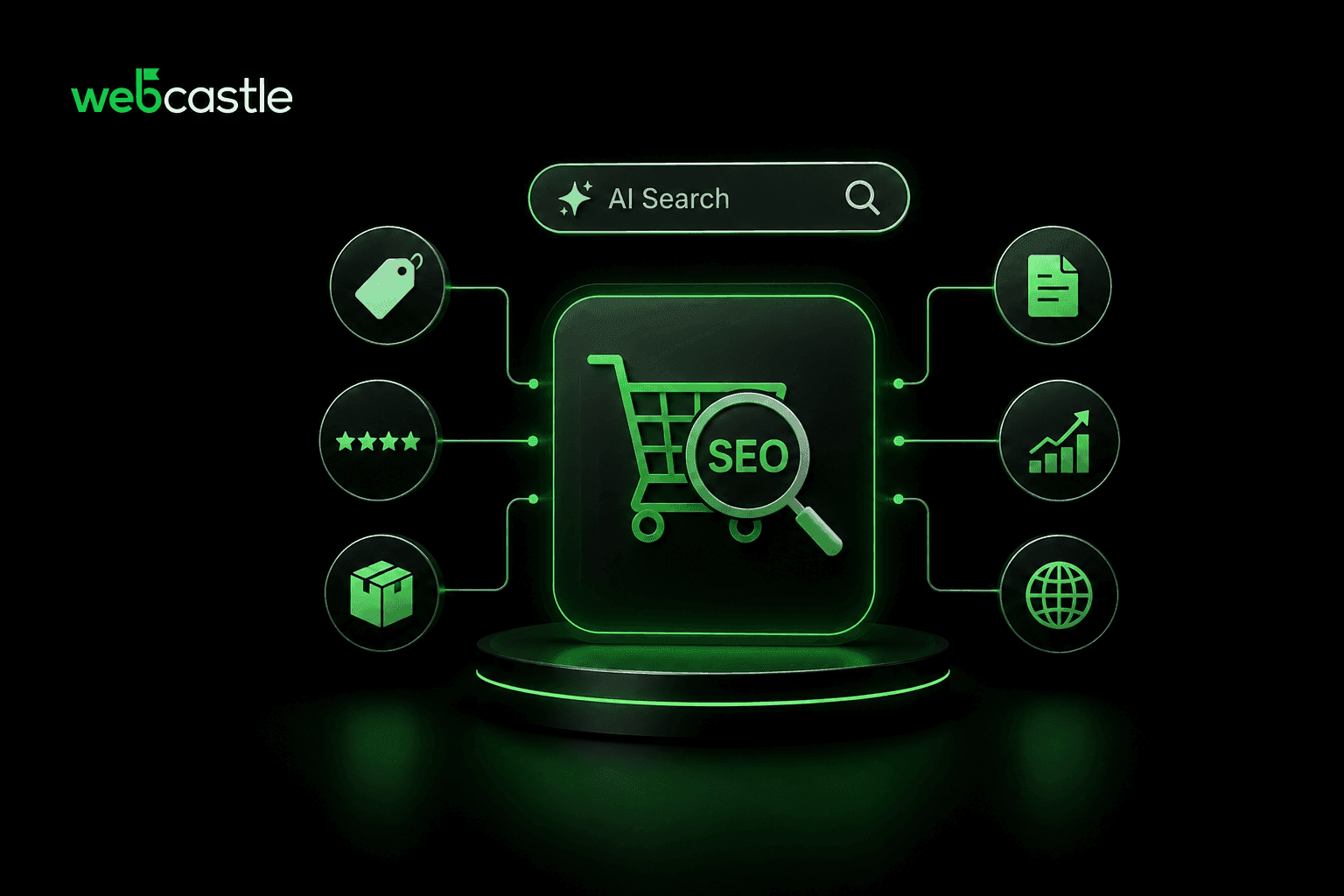
Online shopping doesn't start with a search box anymore. It starts with a question typed into ChatGPT, a prompt on Gemini, or a summary shown in Google's AI Overviews. Shoppers now ask AI tools to compare products, suggest options, and even complete purchases. If your store isn't built for this, you're invisible to a growing share of buyers.
This shift doesn't mean SEO is over. It means the rules have expanded. Rankings still matter, but so does something new: being the product an AI system chooses to mention.
Why AI Search Changes the Game for Online Stores
Traditional search sent shoppers to a page of blue links. They need to click the links, compare and need to decide. AI search skips several of those steps. It reads product data from many sources, picks what it considers the best match, and presents one clear answer or a short list.
Some AI shopping tools go further. They can browse product catalogues, compare prices across stores, and place an order without a person ever opening your website. If your product information is thin, outdated, or hard to read for a machine, you simply won't get picked.
This is why store owners now need to think about two audiences at once: the human reading the page, and the AI system reading the data behind it.
GEO and AEO: New Terms, Familiar Goals
Two terms come up often in this conversation: Generative Engine Optimization (GEO) and Answer Engine Optimization (AEO).
GEO is about shaping your content so AI tools can understand it and confidently cite it. This means clear product descriptions, proper structured data, and content that explains what a product is and who it's for.
AEO is about answering questions directly. Instead of vague marketing lines, your content should respond to real buyer questions in short, clear sections. Think of it as writing for a voice assistant or a chat window, not just a search results page.
Neither term replaces SEO. They build on it. The basics of good content, technical health, and site authority still decide who gets found.
What This Means for Your Product Pages
Focus on intent: A page that says "best running shoes" doesn't help AI or shoppers. Explain who the product suits, what problem it solves, and how it compares to similar options. Specific, honest details perform better than broad claims.
Add structured data: Schema markup for products, pricing, availability, and reviews helps AI tools read your page accurately. Google's own documentation on structured data is a good starting point if your developer needs a reference.
Answer real questions: Add FAQ sections written in plain language. Cover shipping, sizing, returns, and comparisons; the exact questions a buyer would type into ChatGPT.
Use images and video: AI systems increasingly read visual content, not just text. A short product demo video or clear usage photos add context that plain text can't.
Keep pricing and stock data accurate: AI shopping agents compare products in real time. If your pricing or availability is outdated, you lose the sale before a human ever sees the page.
Don't Ignore Off-Site Credibility
AI tools don't only look at your website. They also weigh what other trusted sources say about your brand. Getting mentioned in comparison articles, review roundups, and industry blogs builds the kind of authority that AI systems rely on when deciding what to recommend. This is where a solid content and outreach strategy still earns its place.
AI Search Traffic Converts Better: What the Data Shows
Google still handles the vast majority of search traffic today. But traffic coming from AI-driven search tends to convert at a noticeably higher rate than traditional search traffic, since users arrive with clearer intent. Semrush's own research backs this up, putting the average AI search visitor at several times more valuable than a typical organic visitor, based on conversion rate. Fewer visits, but better ones. That's a trade-off worth planning for, not ignoring.
How to Start Optimizing for AI Search Today
You don't need to rebuild your store from scratch. Start with your best-selling products. Rewrite their descriptions to answer real questions. Add schema markup. Check that your FAQs sound like something a person would actually ask. Then track how often your brand shows up in AI-generated answers, not just how many clicks you get from Google.
Also Read: Generative AI vs. Agentic AI: What's the Difference?
Final Thoughts
AI hasn't replaced search. It has added a new layer to it. Stores that keep their product data clear, structured, and genuinely useful will be the ones AI tools choose to recommend. Stores that don't will quietly fall out of the conversation.
If you want your online store ready for both traditional rankings and AI-driven discovery, working with a Best SEO Company in Kerala that understands this shift can save months of trial and error. WebCastle Media has spent 17+ years helping businesses stay visible as search keeps changing, and this latest shift is no different.
As a full-service Digital Marketing Agency in Kerala, we help online stores build the content, structure, and strategy needed to stay discoverable, whether a customer is scrolling Google or asking an AI assistant for a recommendation.