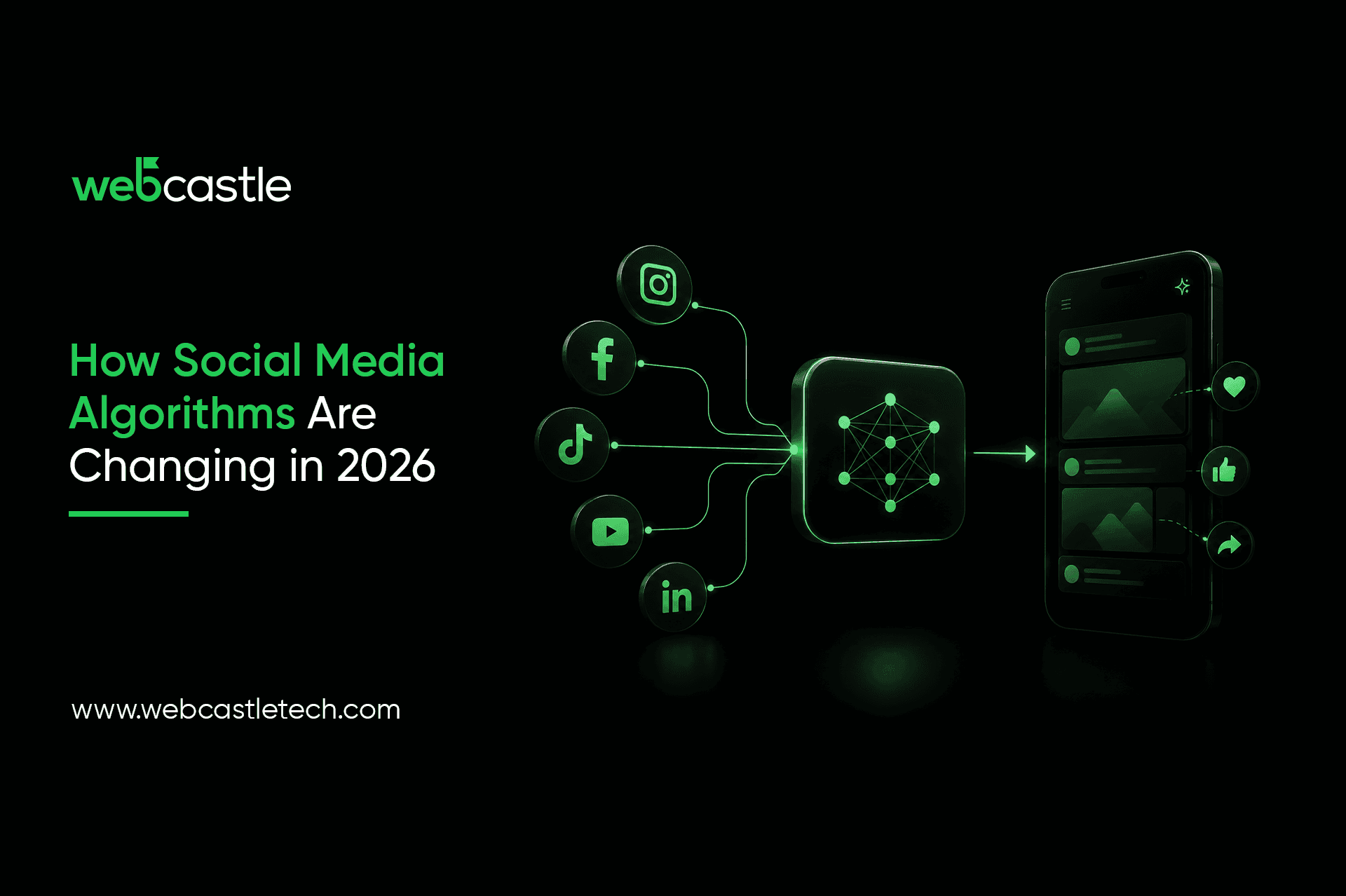
Your last post got 40 likes. Your competitor's got 4,000. Same industry, same effort, same day. The difference isn't luck. It's the algorithm deciding your content isn't worth showing to anyone. That decision gets made in under a second, before a human ever sees your post.
Social media algorithms in 2026 don't reward posting more. They reward specific signals: content people share privately (not just like), search-style captions people actually type into the platform's search bar, and how long someone watches before scrolling away. Instagram alone evaluates around 500 posts per session before deciding what you see.
TikTok and YouTube have dropped chronological feeds entirely. Bluesky is the one major platform that hasn't. Bluesky's real distinction is that chronological is the default; everywhere else it's opt-in, and most people never switch. If your content strategy is still built around posting frequency and hashtags, you're optimizing for 2019. This blog tells you what actually moves the needle now, and where to get help if you'd rather not run the experiment yourself.
Social Media Marketing Trends: Understanding Algorithms and User Behavior
Most businesses treat social media marketing like a numbers game. Post daily, use trending audio, stack ten hashtags, hope something sticks. That approach worked when feeds were mostly chronological, and reach was a function of follower count.
That era is over.
Here's what's actually happening on the platforms right now:
- Instagram's feed algorithm runs every post through four stages before it reaches anyone: gather, evaluate, predict, rank. Predicted engagement, not follower count, decides who sees you.
- Meta's own documentation confirms two separate reach tiers. Likes drive reach to people who already follow you. Shares and sends drive reach to people who don't. Most brands optimize for the wrong tier.
- TikTok's For You Page now accounts for over 70% of all video views on the platform. If your content doesn't get pulled into that recommendation engine, it doesn't matter how good your page looks.
- LinkedIn actively suppresses accounts that post more than once every 12 hours, tag people they're not connected to, or overload posts with hashtags.
Organic reach isn't dead. It's just no longer distributed evenly. It goes to the content that the algorithm can confidently predict people will act on, and most businesses are still guessing rather than building for that prediction.
The second problem is bigger: people have started using social platforms as search engines. Around two-thirds of US consumers have already used social search to look up a product, place, or service before checking Google.
How Social Media Algorithm Works in 2026
Watch time now outweighs vanity metrics. Platforms track how long someone stays on your content before swiping away. A 15-second video that holds attention for 14 seconds beats a polished video people skip in 2 seconds. This means:
- Hook viewers in the first second, not after a logo animation
- Cut the intro music and branding lead-in
- Native platform edits (captions, format, pacing) outperform recycled ad creative
Shares matter more than likes. A like tells the algorithm "I saw this." A share tells it, "this is worth someone else's time." Content built to be sent, not just seen, gets distributed further. That means:
- Practical, useful posts (checklists, comparisons, local tips) outperform inspirational quotes
- Content that answers a specific question travels through DMs, which platforms weigh heavily
Search-style captions beat clever captions. If people are searching directly on platforms, write as if you're answering a search query.
- Use the actual phrase your customer would type: "affordable interior designers Kochi," not "transforming spaces, one dream at a time"
- Front-load the answer, not the wordplay.
Chronological feeds are mostly gone. TikTok and YouTube don't offer one at all. Instagram and Facebook default to algorithmic ranking. Assume your post is competing for a ranked slot, not appearing in a timeline.
Platform-specific behavior still decides suppression. LinkedIn punishes spam-like posting patterns. Instagram penalizes reposted watermarked content from other platforms. Know the platform's actual rules, not general "best practices" copied across every channel.
None of this is about posting harder. It's about posting content built for how the social media algorithm actually reads it now, which is closer to a search engine's ranking logic than a broadcast feed.
Where this leaves you
Social media trends move fast enough that most in-house teams are reacting to last year's rules while this year's rules quietly take over. That's not a knock on anyone running a business. It's just not a full-time job most founders or marketing managers have room for.
If you're in Kerala or running a business that needs a social media agency in Kerala that actually tracks these shifts instead of recycling last year's playbook, that's the exact gap WebCastle Media fills. We build content around what the algorithm rewards today, not what worked two feed updates ago.
Reach out to WebCastle, and let's look at what your current content is actually optimized for and what it should be optimized for instead.