
Let’s Talk


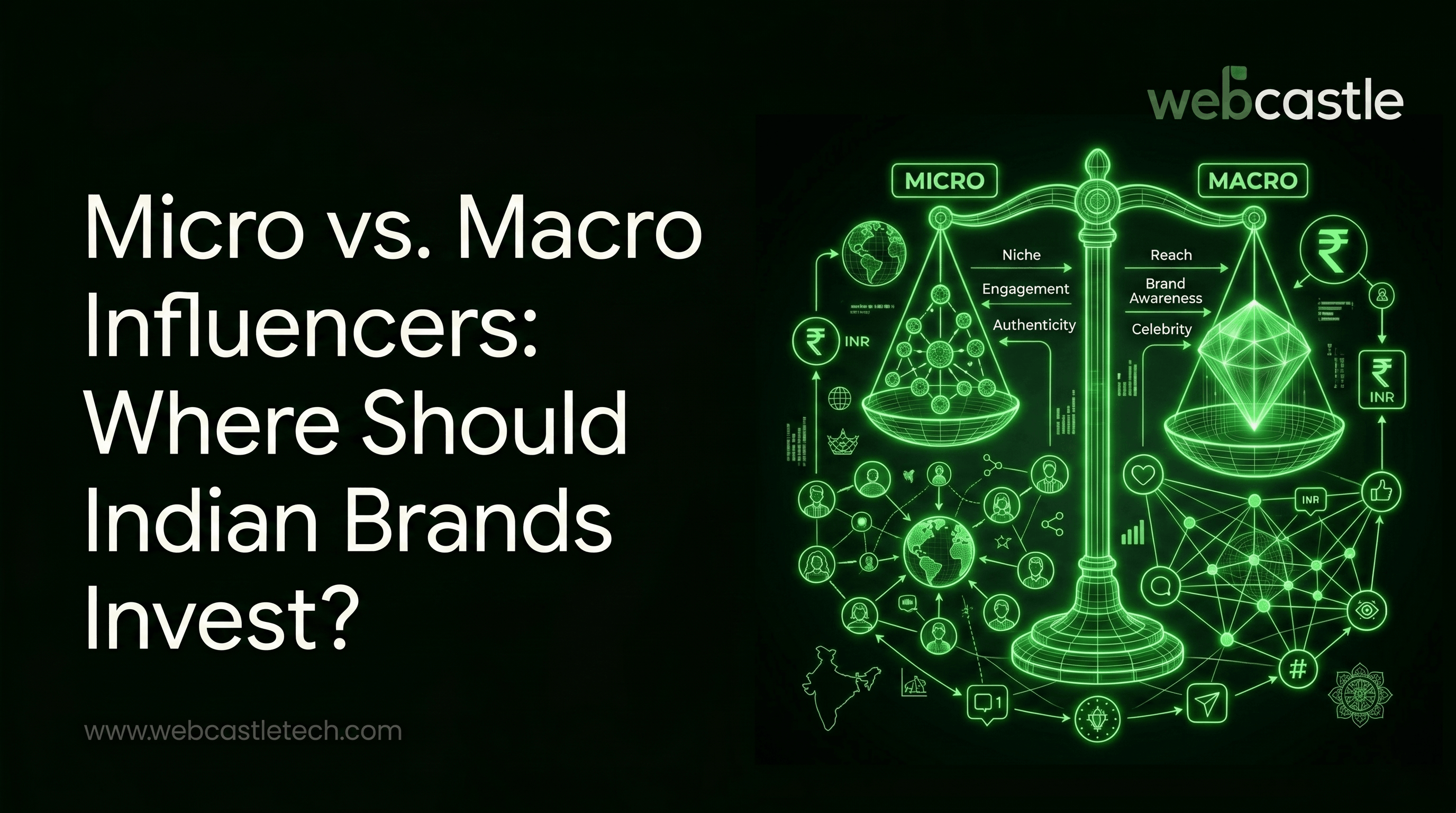
Open any serious marketing plan today, and influencer marketing in India sits near the top. But while budgets are increasing, clarity isn’t. Brands still struggle with one question: who actually drives results?
This confusion is why businesses often turn to social media marketing companies in India or a full-service digital advertising agency India to structure campaigns that go beyond vanity metrics.
Campaigns for urban Gen Z on Instagram differ from those targeting tier-2 buyers. Many fail by ignoring finding genuine Instagram influencers.
The smartest brands align influencer campaigns with:
This is also why brands working with a web designing company in India or web development India teams see better results—because influencer traffic needs a localized, high-converting destination supported by the best SEO services in India.
In reality, nano and micro influencer ROI often outperforms macro campaigns—especially when trust matters more than reach.
This isn’t about size. It’s about how trust works.
Smaller creators often feel more genuine, so their recommendations carry more weight than a typical celebrity endorsement vs social creators comparison.
Engagement numbers reflect this. Micro influencers often see 3–6x higher engagement rates than macro creators. More importantly, the nature of that engagement is different. Comments like “just bought this, thank you” or “where’s the link?” are purchase signals. Passive likes on a macro post are not.
None of this means macro influencers are a waste. When a brand needs rapid national recognition — a new product launch, a funding announcement with consumer-facing implications, a rebranding — the scale a macro creator offers is hard to replicate any other way. The problem is when macro becomes the default because it feels more serious, not because it actually fits the goal.
Fake followers are common, especially in high-budget niches. Watch for low engagement and generic comments—they’re key warning signs, which is why using fake follower detection tools is critical.
Audience geography matters too. A Mumbai-based food creator whose audience is majority non-India should raise questions before any money moves.
Tools like HypeAuditor, Modash, and Social Blade each give a reasonable read on audience quality. None of them are perfect, but running a check before signing any agreement is a basic step that a surprising number of brands skip when finding genuine Instagram influencers.
Nano creators often work on barter or low fees. Micro influencers charge mid-range rates depending on niche. Macro creators are the most expensive, with costs rising quickly. Celebrity-tier is a separate category — usually ₹5 lakhs minimum per post, often much higher, which directly impacts influencer marketing agency costs.
For a brand with a fixed budget, ten micro influencers in the right niches will almost always produce more usable results than one macro deal — more content, more varied reach, more real conversations, and usually leftover budget to boost what’s actually working.
Many influencer campaigns fail due to unclear expectations—not the creator. Define the basics: posts, format, platform, content, approvals, and payment. Clear briefs lead to better results and smoother execution of structuring brand collaborations.
Also decide early: one-off post or ongoing collaboration. Repeated mentions build stronger trust than a single promotion, especially in long-term brand ambassador programs.
Using influencer outreach email templates can simplify onboarding and communication.
Use tracking links or discount codes to measure what actually drives results, along with affiliate tracking for creators.
Influencer marketing in India conversations almost always stop at the creator — which creator, which platform, which format. What they rarely cover is what happens after someone clicks, including user generated content (UGC) creation performance and conversion.
An influencer drives a genuinely interested person to your website or product page. If that page is slow, looks wrong on mobile, or doesn’t make the next step obvious — that interested person leaves. The influencer did exactly what they were paid to do. The destination wasted it.
This is where WebCastle Technologies in Kochi comes in. They build websites for Indian brands with conversion as the actual objective — not just aesthetics. They handle web design, development, SEO, and ads—so your campaigns don’t just attract traffic, they convert it, aligning with best SEO services in India standards.
Influencer campaigns today must also follow FTC and ASCI guidelines for influencers to maintain transparency and trust with audiences. Clear disclosure (#ad, #sponsored) is mandatory under ASCI guidelines.
Macro influencers make sense when you need scale fast and your brand already has some recognition to build on. Micro and nano influencers make sense when trust, niche relevance, and genuine engagement matter more than raw numbers — which, for most Indian brands still building their market, is most of the time.
Pick based on what the campaign actually needs to do. Not on what sounds like a bigger deal.
If you’re investing in influencer campaigns, make sure your website can convert the traffic. WebCastle Technologies builds the design, development, SEO, and ads that make it work.
The right influencer matters. But what happens after the click matters more.

Call